Introduction
Cloud environments do not sit still. Workloads spin up and disappear in seconds, identities shift roles, and traffic paths change as teams deploy new services across AWS, Azure, and private infrastructure.
That constant motion is exactly what makes visibility so hard to maintain.
Most organizations aren't running one cloud. In Flexera's 2024 State of the Cloud Report, 89% of surveyed decision-makers reported a multicloud strategy, with 59% actively using multiple public clouds.
Blocking unauthorized access isn't enough anymore. Security teams need continuous visibility, real-time behavioral detection, and enough context to understand why an event matters.
This article covers how that works: core definitions, detection workflows, foundational controls, and how AI-driven detection can extend what your existing cloud security stack already does.
Key Takeaways
- Cloud-based network security protects data, workloads, identities, and traffic through distributed controls, not a single perimeter.
- Real-time visibility blends network telemetry, identity signals, and behavioral analysis to catch lateral movement early.
- Zero trust, segmentation, encryption, and automated response form a layered defense system.
- AI-driven detection helps identify unknown threats while cutting alert fatigue for already-stretched SOC teams.
Cloud-Based Network Security Explained
Cloud-based network security is the combination of technologies, policies, and operating processes that protect public, private, hybrid, and multicloud environments from unauthorized access, misuse, disruption, and data loss. Unlike a data center with a defined edge, cloud protection has to follow the assets themselves.
Why the Perimeter Model Breaks Down
Traditional network security assumed a fixed boundary: a firewall at the edge, trusted traffic inside, untrusted traffic outside. Cloud computing erases that boundary. Protection now has to follow:
- Users logging in from anywhere, on any device
- Workloads that scale up and down automatically
- APIs connecting services across different providers
- Containers with IP addresses that change by the minute
- Data moving between storage tiers and regions
Shared Responsibility: Know Your Half
Every major cloud provider draws a line between what they secure and what customers must secure themselves.
| Provider | Provider Secures | Customer Secures |
|---|---|---|
| AWS | Underlying infrastructure | IAM permissions, guest OS, security groups |
| Microsoft Azure | Varies by IaaS/PaaS/SaaS | Data and identities, always |
| Google Cloud | Network and infrastructure | Access policies and data |
Misreading this boundary is one of the most common causes of cloud breaches. The provider securing "the cloud" does not mean your IAM configuration is correct.
Preventive vs. Detective Controls
Both matter, but they do different jobs:
- Preventive controls stop known bad activity before it happens: firewalls, access policies, encryption requirements.
- Detective controls find activity that got past prevention: network detection, behavioral analytics, centralized monitoring, and correlation across logs.
A strategy built only on prevention misses the attacker who already has valid credentials.
How Real-Time Threat Detection and Visibility Work
Detection starts with telemetry, not alerts. Security teams need a continuous flow of data from every layer of the environment before any meaningful analysis can happen.
The Telemetry Lifecycle
- Collect: network flows, DNS activity, authentication logs, cloud API calls (such as AWS CloudTrail), workload behavior, and endpoint or OT signals
- Normalize: standardize formats so data from different sources can be compared
- Correlate: connect events across cloud, hybrid, and on-premises environments to see the full picture
This matters because visibility gaps are expensive. IBM's 2025 Cost of a Data Breach Report found that breaches involving data stored across multiple environments took an average of 276 days to identify and contain, at an average cost of $5.05 million.
Context Changes Everything
A login from a new country isn't automatically suspicious. A privilege escalation isn't automatically an attack. What makes an event worth investigating is context: the affected asset, the identity's normal behavior, and what happened right before it.
Security analytics establish a behavioral baseline for users, devices, applications, and network segments. Deviations from that baseline, not rigid rule violations, are what flag real risk.
North-South and East-West Activity
Detection needs to cover traffic in both directions:
- North-south traffic: internet-facing attacks, command-and-control communication, data exfiltration attempts
- East-west traffic: lateral movement between workloads, privilege abuse, anomalous service-to-service communication
MITRE ATT&CK documents how attackers move laterally using valid cloud accounts synchronized or federated with on-premises identities, which is exactly why identity and network signals need to be analyzed together, not separately.
Rules Alone Aren't Enough
Signature-based detection catches known threats. It cannot catch what it's never seen. Behavioral AI models fill that gap by flagging activity that deviates from an established baseline, regardless of whether a signature exists.
MixMode's approach reflects this directly. The platform's self-supervised AI continuously builds a behavioral model of network and system activity, correlating CloudTrail, VPC Flow Logs, and SIEM data to surface deviations in real time rather than waiting on static rule matches.
From Alert to Resolution
A mature detection workflow typically runs:
- Alert generation from correlated telemetry
- Prioritization based on asset criticality and risk score
- Investigation using logs, packet captures, and identity context
- Containment: isolating a workload or restricting an identity
- Documentation and SIEM/SOAR integration for the record

Core Components of Cloud-Based Network Security
No single control covers everything. Layered defense combines several categories, each addressing a different failure mode.
Identity and Access Controls
Identity has become the new perimeter. Core controls include:
- Identity and access management (IAM) with least-privilege defaults
- Role-based access control and federation across cloud accounts
- Privileged access management for high-risk accounts
- Multifactor authentication on every sensitive login
NIST's Zero Trust Architecture guidance recommends access decisions that weigh identity, device state, and behavior rather than network location alone. Continuous evaluation, not a one-time login check, supports this model across distributed users and services.
Network Segmentation and Traffic Control
Segmentation limits how far an attacker can move after getting in. That includes virtual networks, security groups, microsegmentation, and strict ingress/egress rules.
CISA's 2025 microsegmentation guidance describes zero-trust access rules based on identity, device information, and connection metadata rather than IP addresses alone. This matters for containers especially: orchestrators change container IP addresses constantly, making static-IP firewall rules impractical to maintain.

Encryption and Secure Connectivity
Encryption protects data but doesn't replace detection. Baseline practices include:
- TLS 1.3 for data in transit
- Encryption at rest, enabled by default on most major platforms
- Private connectivity options instead of public internet exposure
- Clear key-management ownership, especially for customer-managed keys
Continuous Monitoring and Behavioral Analytics
Continuous monitoring turns raw telemetry into operational visibility. Centralized dashboards, cloud-native logs, flow records, and anomaly detection form the foundation.
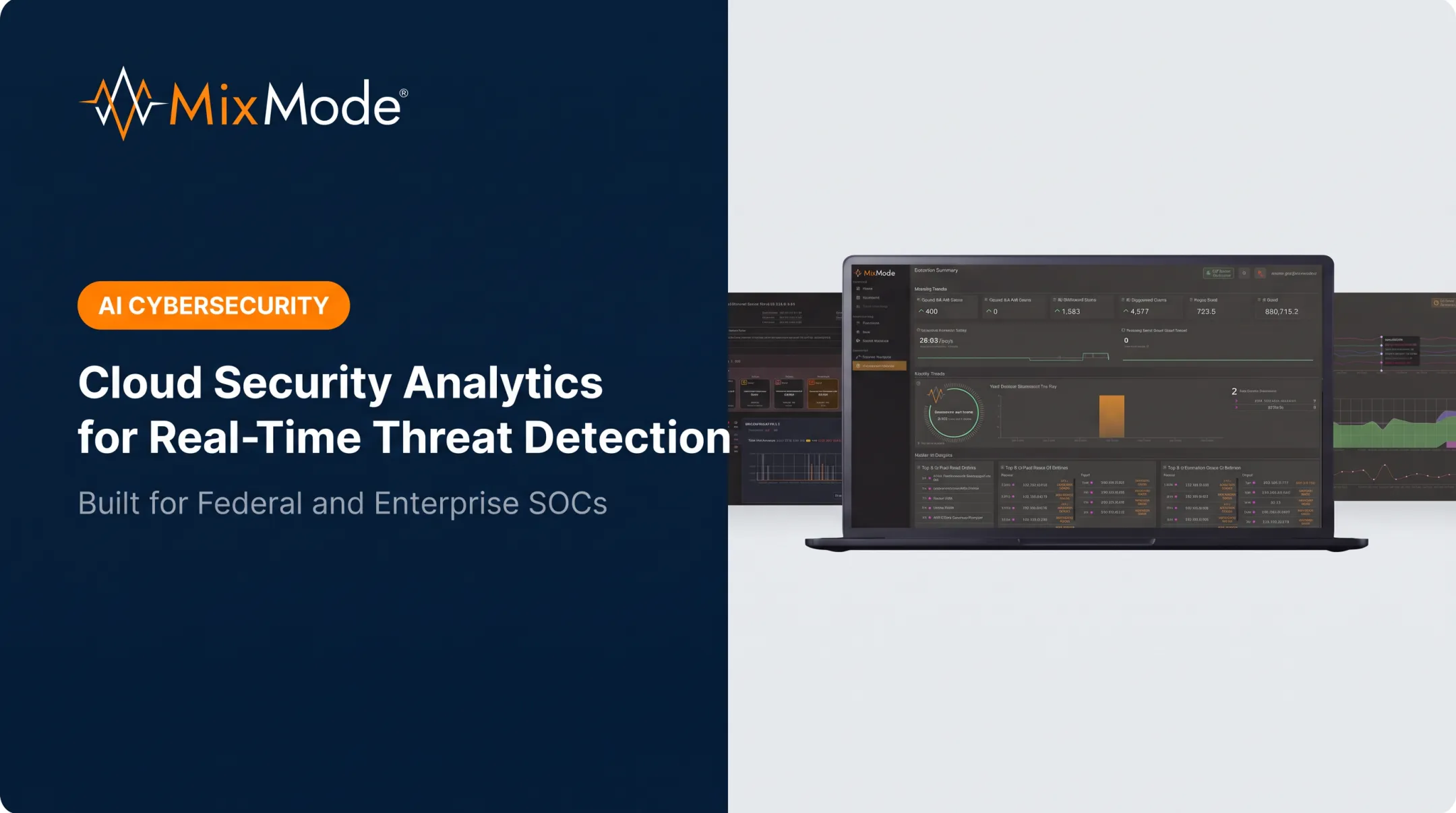
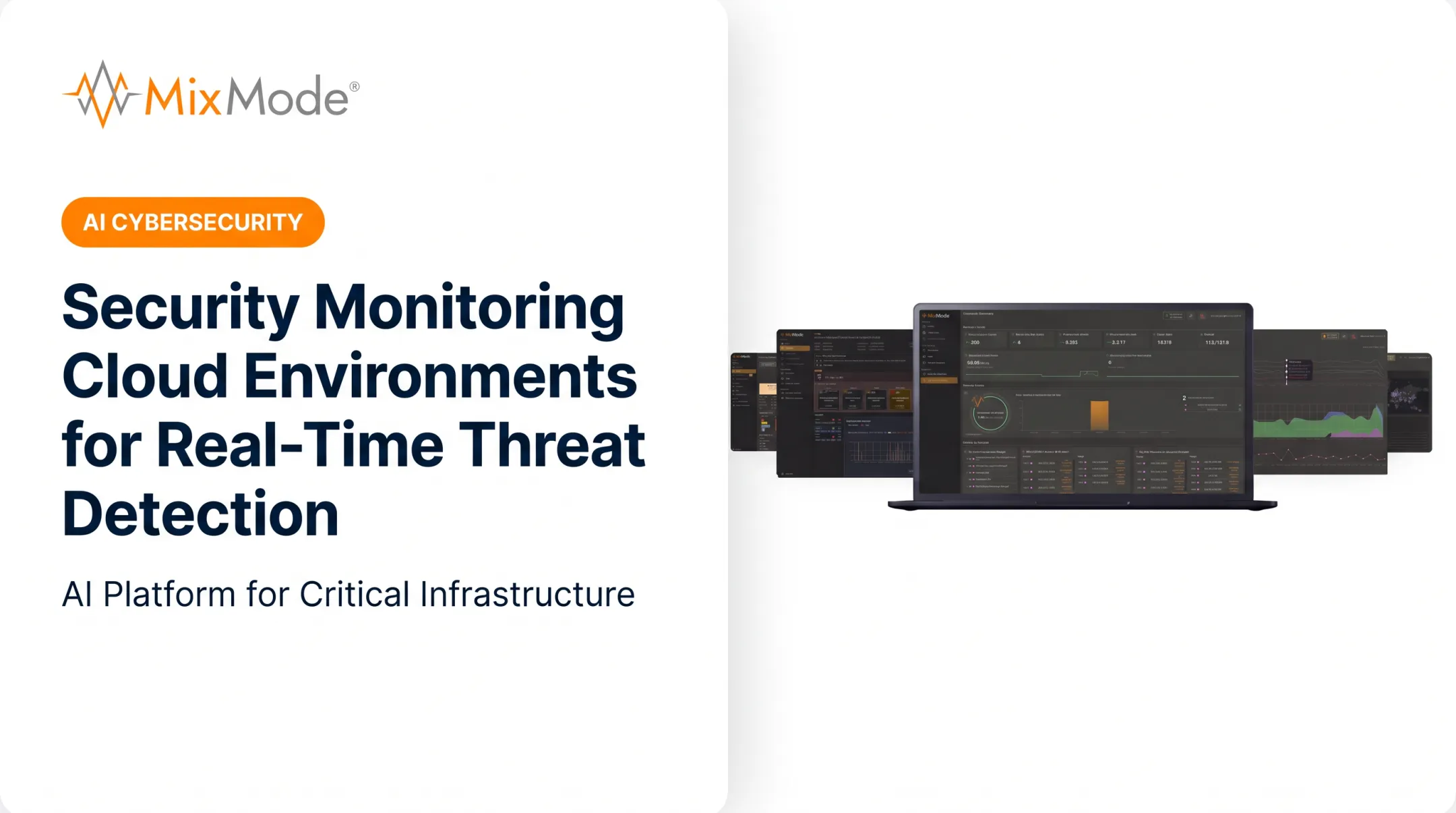
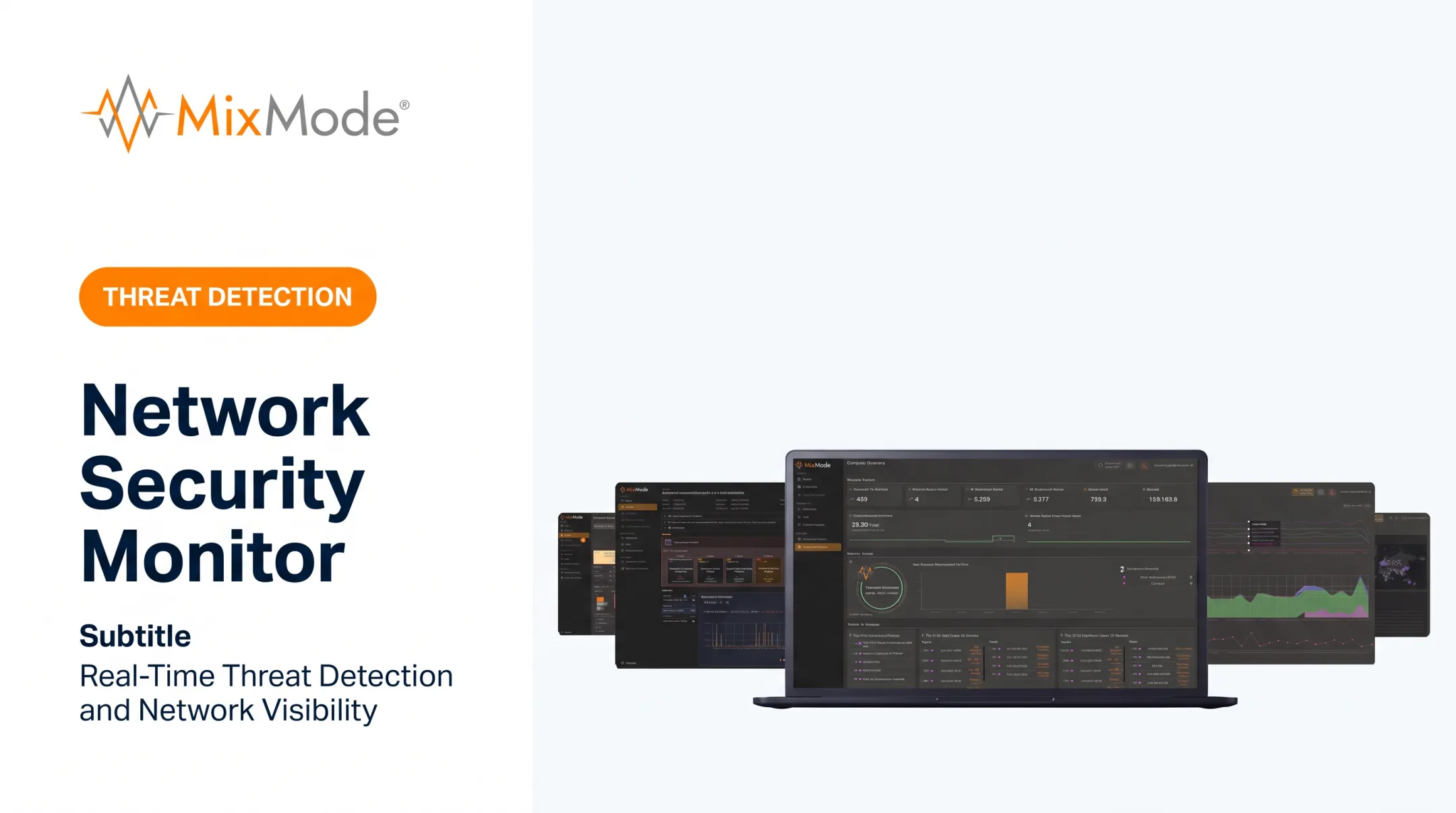
MixMode's Cloud Detection and Response monitors cloud environments, network traffic, and user behavior in real time. It correlates those sources to surface relevant threats so analysts are not left piecing together fragmented logs.
Workload, Container, and API Protection
Posture management finds weaknesses before deployment. Runtime detection catches exploitation after deployment. Both are necessary:
- Kubernetes NetworkPolicies control pod traffic at the IP/port level, but only work with an enforcing network plugin
- API activity monitoring catches service-to-service abuse
- Runtime behavioral monitoring flags active exploitation that posture scans miss
Integration and Response Automation
Detection without response is just noise collection. Connecting cloud security tools to SIEM, SOAR, and incident-response workflows turns a correlated alert into action.
Example: A behavioral anomaly flags unusual data transfer from a workload with no prior history of external connections. The platform correlates this with an identity that recently had a privilege change and raises the risk score. An automated response then isolates the workload while preserving logs and packet captures for investigation.
Building an Effective Cloud Network Security Strategy
A strategy only works if it starts with an honest inventory of what you actually have.
Start With Discovery
Map out every cloud account, workload, API, identity, container, and sensitive data store, including connections to on-premises or OT systems. You can't secure what you can't see.
Define Ownership and Priorities
Clarify who owns what under the shared responsibility model, then map requirements to business-critical applications, regulatory obligations, and acceptable risk tolerance.
Build Layered Controls
Stack complementary controls so no single layer carries the full load:
- Zero trust and least privilege
- Segmentation and encryption
- Secure configuration and vulnerability management
- Continuous monitoring
Ask the Right Visibility Questions
Before trusting a security stack, confirm it can answer:
- Can we see relationships between assets and identities?
- Do we have east-west traffic visibility, not just north-south?
- Can we trace the sequence of events leading to an alert?
- Do we have metadata visibility into encrypted traffic where appropriate?
Measure What Matters
Track operational metrics like mean time to detect, mean time to respond, false-positive workload, and coverage of critical assets. Mandiant's M-Trends 2025 reports an 11-day global median dwell time for investigated intrusions (a useful reference point, though not a universal cloud benchmark).

Common Challenges
Expect friction from:
- Configuration drift and shadow IT
- Ephemeral, short-lived workloads
- Tool fragmentation across cloud providers
- Encrypted traffic limiting inspection
- Inconsistent policies across multicloud environments
- Limited security staffing relative to alert volume
Implementation Sequence
- Establish a visibility baseline across accounts, workloads, and identities
- Connect high-value data sources before lower-priority feeds
- Tune detection and access policies against real traffic patterns
- Integrate response workflows with existing SOC tooling
- Test readiness through tabletop exercises
- Review coverage continuously as environments change
MixMode and the Cybersecurity Intelligence Layer
MixMode is an AI-first cybersecurity company built around a patented, self-learning platform called the Cybersecurity Intelligence Layer. The platform detects known and unknown threats in real time across cloud, hybrid, on-premises, edge, air-gapped, and DDIL environments.
The difference is how it learns. Instead of depending on static rules, signatures, or repeated model retraining, MixMode's self-supervised AI continuously models network context and behavioral patterns. It starts learning within the first five minutes of deployment and needs no historical training data or GPU infrastructure.
That architecture connects directly to the visibility challenges covered throughout this article:
- Detects pre-attack indicators and in-progress activity, not just completed breaches
- Provides unified visibility across IT and OT environments, useful for utilities and manufacturers running converged networks
- Analyzes over 100 Gbps of network traffic or billions of records monthly
- Integrates with existing SIEM and orchestration platforms rather than replacing them
The City of Phoenix has described MixMode's platform as "the core intelligence layer for our Security Operations Center." That role matches the design: MixMode complements existing SIEM, UEBA, and NDR investments rather than forcing a rip-and-replace.
That combination suits enterprise SOC teams managing alert fatigue and federal agencies securing sensitive networks. It also fits critical-infrastructure operators, including utilities and manufacturers, that need broader visibility without another disconnected tool in the stack.
If your team is evaluating how an AI-driven detection layer could fit into your current cloud or hybrid architecture, schedule a demo to see how it works against your own traffic.
Frequently Asked Questions
What is network security in cloud computing?
It's the combination of technologies, policies, and processes used to protect cloud networks, workloads, data, identities, and traffic from unauthorized access and cyber threats. It spans everything from IAM to runtime detection.
Is SWG a firewall?
No. A secure web gateway focuses on web access control, URL filtering, and malware inspection for internet-bound traffic. A firewall controls broader network access and traffic flow, including internal segments.
What is cloud-delivered protection?
It's security controls and intelligence delivered from cloud-hosted infrastructure rather than local appliances, covering network security, IAM, and encryption at scale. It changes how protection is delivered, not who owns the underlying data and access responsibilities.
How does real-time threat detection work in cloud environments?
It relies on continuous telemetry collection, behavioral baselining, event correlation across data sources, and alert prioritization, followed by automated or analyst-led response. Speed depends on how well those stages connect.
Why is visibility important in cloud network security?
Visibility reveals asset relationships, identity context, traffic paths, and suspicious behavior that would otherwise go unnoticed. Without it, lateral movement and credential misuse can persist for months before detection.
What should organizations look for in a cloud network security solution?
Look for multicloud and hybrid coverage, real-time behavioral detection, identity and workload context, segmentation support, SIEM/SOAR integrations, and clear alignment with shared-responsibility requirements.