Introduction
Security teams drown in alerts long before they run out of data.
Incident triage is the structured process of validating, assessing, prioritizing, and routing potential security incidents before they escalate into breaches. It's the filter between "something looks odd" and "we need to respond right now."
This article is for SOC analysts, incident responders, security leaders, and teams managing alerts across enterprise, government, cloud, hybrid, IT/OT, and critical-infrastructure environments.
Security teams report handling over 22,000 alerts weekly, with AI reviewing about half and analysts actually investigating just 35% of that volume. Without a disciplined triage process, the alerts that matter most get buried under the ones that don't.
We'll walk through how triage actually works, what inputs analysts need, the operational factors that shift priority, and where even a solid process hits its limits.
Key Takeaways
- Incident triage decides whether an alert is a credible threat, how severe it is, and what happens next, before deeper investigation begins
- Effective prioritization weighs technical evidence alongside asset criticality, identity risk, data sensitivity, and regulatory exposure
- A repeatable workflow spans validation, enrichment, classification, scope assessment, severity assignment, escalation, ownership, and documentation
- Automation speeds correlation and evidence gathering, but ambiguous findings and high-impact escalation still need human judgment
What Is Incident Triage?
Incident triage is the rapid assessment and prioritization of security alerts or reported events. The goal: determine whether an alert is credible, how urgent it is, how far it reaches, and what should happen next.
Done well, triage sends limited analyst hours toward the incidents most likely to cause damage. Low-risk events get closed or queued, with a documented reason, not a shrug.
Triage sits inside a larger chain of activities, and it's easy to blur the lines between them:
- Alert monitoring identifies signals, the raw "something happened" notification from a SIEM, EDR, or network sensor
- Triage evaluates those signals and decides what matters, how badly, and in what order
- Investigation builds out the evidence and tests hypotheses about what actually occurred
- Incident response covers the full lifecycle, from containment and eradication through recovery and lessons learned, once an incident is confirmed
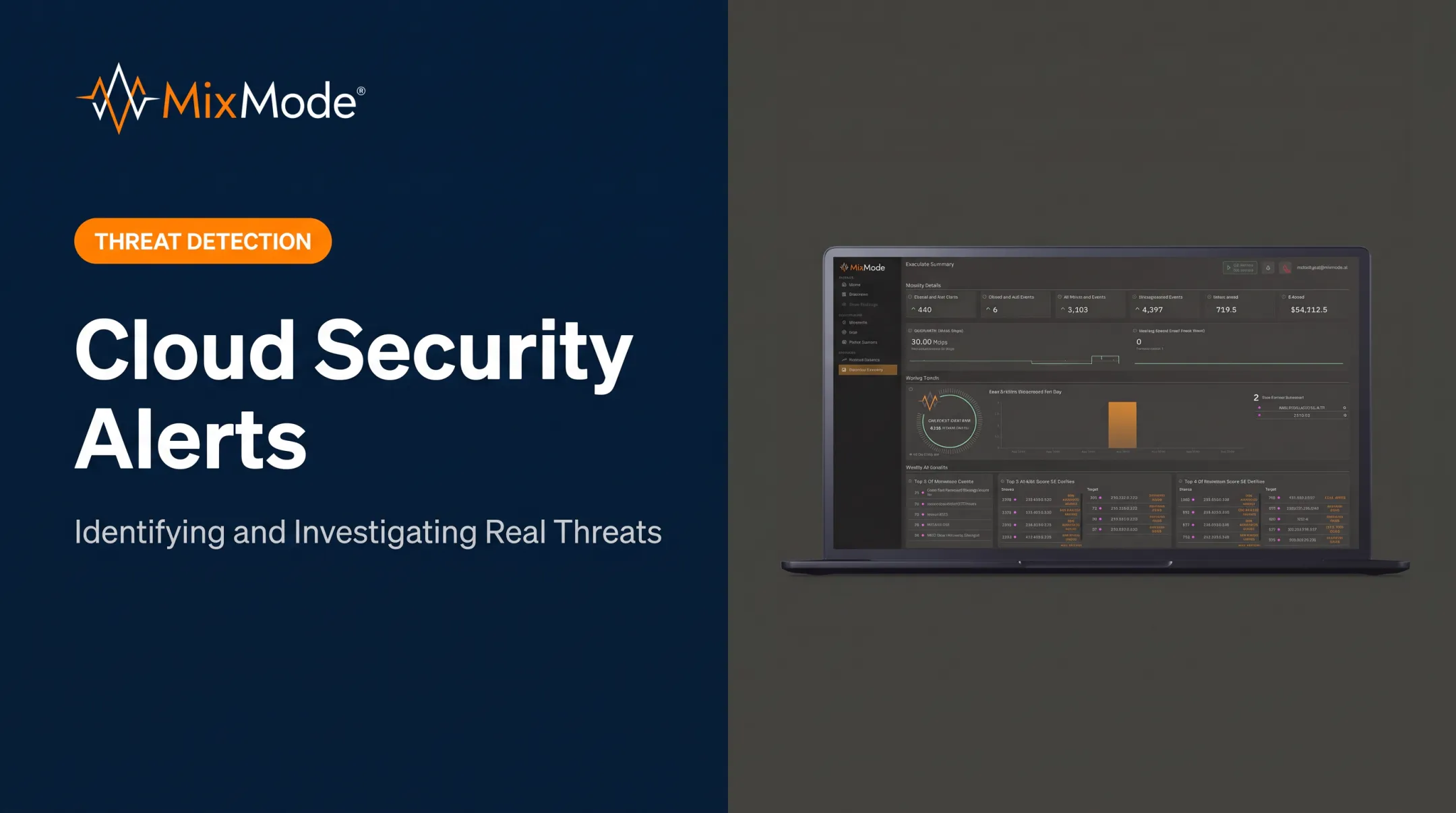
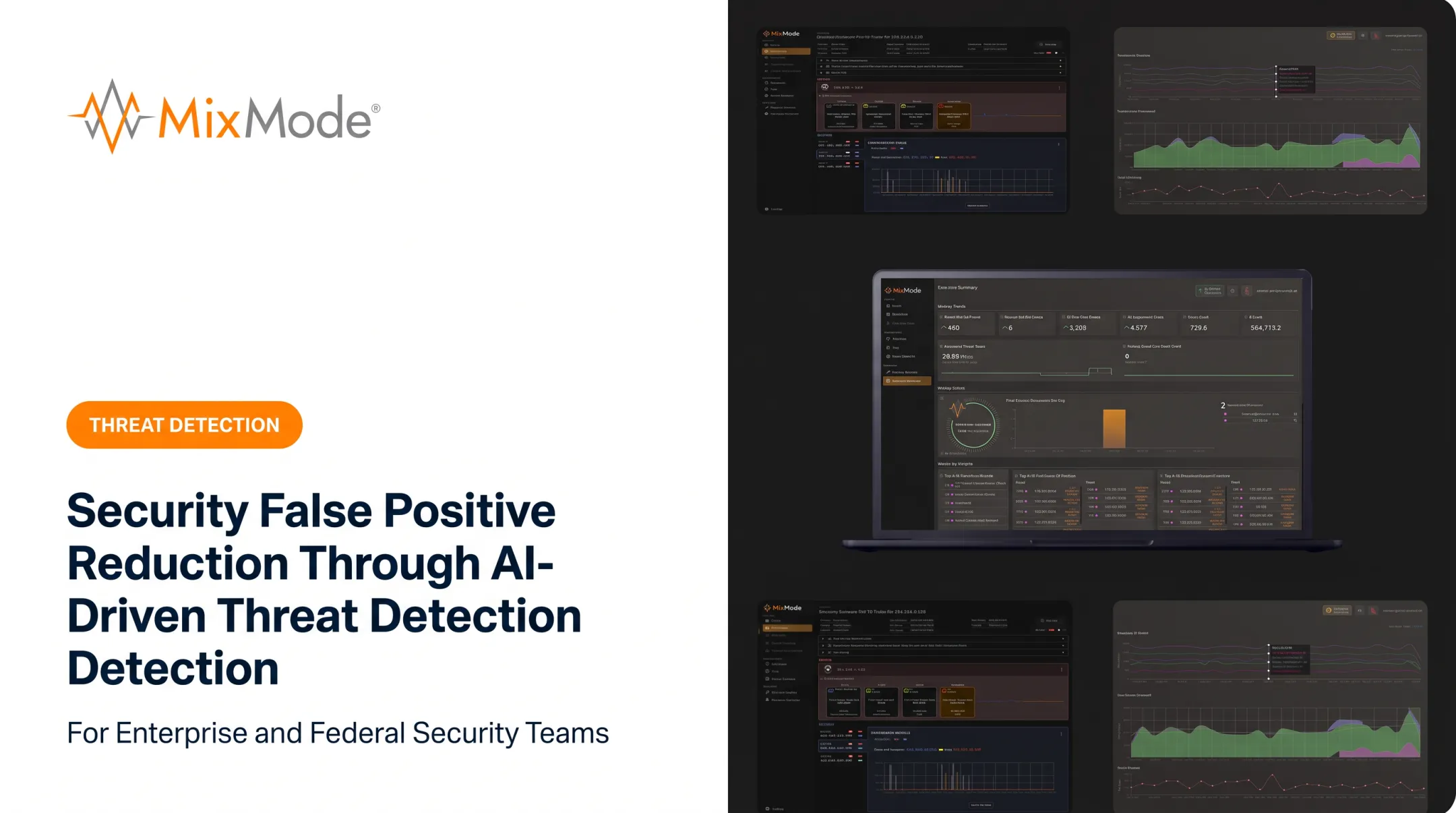
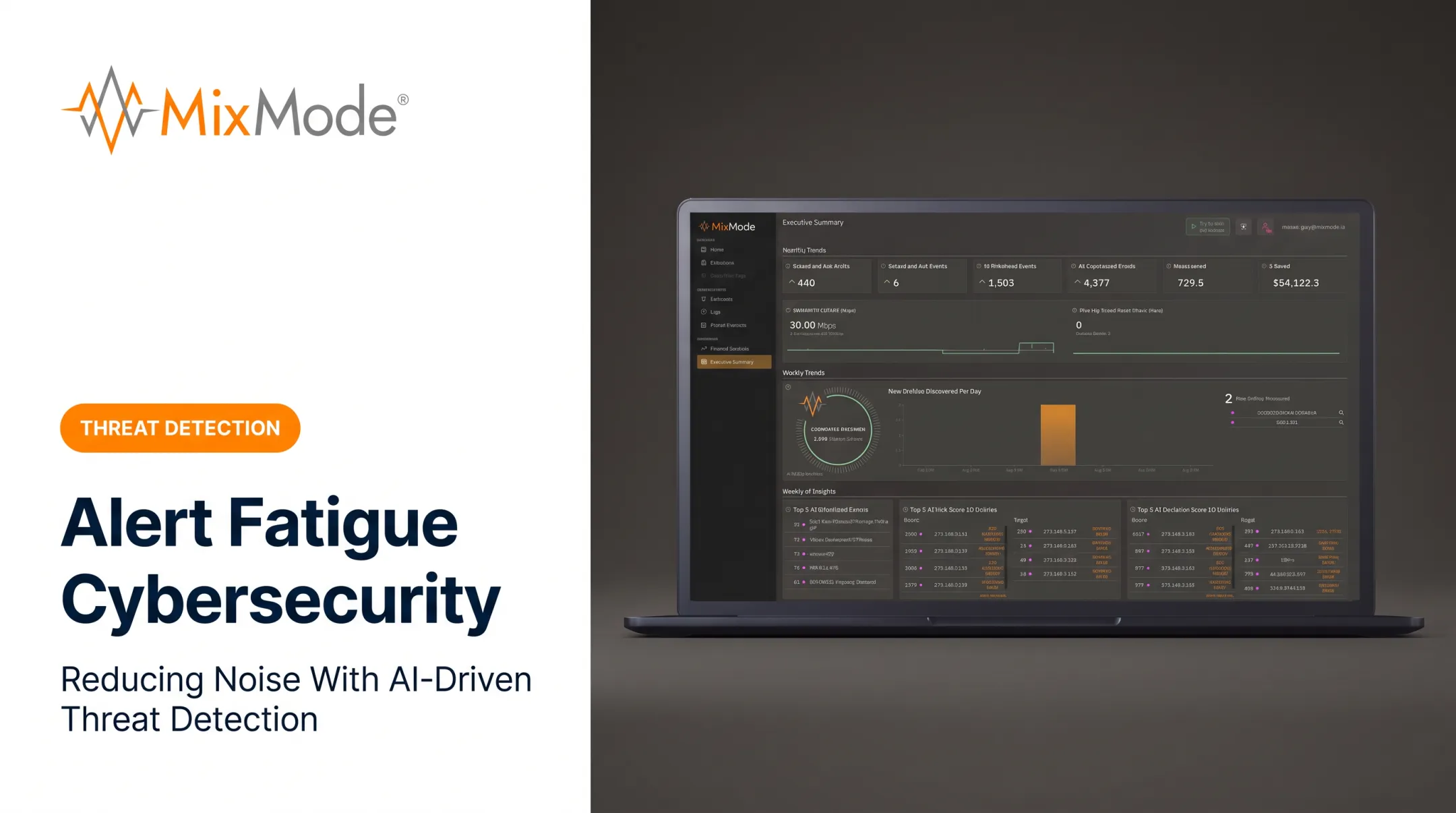
MixMode's Enhanced Cyber Triage capability illustrates the distinction in practice. It prioritizes alerts and separates critical threats from background noise before an analyst opens a case file, using AI confidence, potential impact, and organizational relevance to decide what gets attention first. That's triage.
Pulling packet captures, correlating logs, and confirming lateral movement comes next, and that's investigation.
The difference matters operationally. Teams that skip straight from "alert fired" to "full investigation" burn analyst time on events that proper triage would have ruled out in minutes. Teams that triage without ever investigating end up closing tickets on guesswork, which carries its own risk.
Why Incident Triage Matters for Security Operations
Alert volume alone can bury a security team. SOC respondents in SANS's 2024 Detection and Response Survey named false positives their top operational challenge: 64% called them a major pain point, and 42% said false positives account for 41% to 80% of total alert volume, according to SANS's detection survey.

Fragmented telemetry across cloud, on-premises, and OT tools compounds the problem. With chronic SOC understaffing, analysts spend disproportionate time chasing noise while real indicators slip past.
Business context changes everything. An authentication anomaly on a disposable test server and the same anomaly on a domain admin account aren't the same event, even if the raw log entry looks identical. Priority should shift based on:
- Privileged or administrative account access
- Systems that touch sensitive or regulated data
- Public-facing assets or those inside a utility control network
- Activity that could precede lateral movement
Weak triage has real consequences. Delayed containment, unclear ownership, inconsistent escalation, and missed pre-attack indicators all trace back to one root cause: nobody made a confident, documented call on what mattered early enough.
Getting triage right shows up in detection speed. Mandiant's 2025 M-Trends report found a global median dwell time of 11 days, the gap between intrusion and detection. That figure drops to just 5 days when the adversary itself tips off the victim organization, according to Mandiant's M-Trends report. Faster, better-prioritized triage compresses that window directly.
One MixMode government customer saw this play out firsthand: a 97% reduction in false positives within the first week of deployment, using detection that required no static rules and no manual tuning. Separately, a large financial services institution using MixMode identified an attack in progress in under 72 hours, one that existing security tools had already missed.
How Incident Triage Works: From Alert to Investigation
Triage follows a conceptual flow, even when the details vary by organization: intake and validation, enrichment, classification, severity and impact assessment, scope investigation, escalation, ownership, and documentation.

Alert Intake and Validation
Start with the basics. Identify the alert source and timestamp, verify the underlying data is trustworthy, and correlate it with related signals before acting. Check for known benign explanations, such as a scheduled maintenance window or a legitimate admin task. Record an initial hypothesis, but hold off on declaring an incident.
Context Enrichment and Classification
Add the context that turns a raw alert into something decision-worthy: asset criticality, account privilege, data sensitivity, historical behavior, threat-intelligence matches, and known vulnerability context. Then classify the event, whether as phishing, malware, unauthorized access, account compromise, insider threat, data exfiltration, lateral movement, denial-of-service, or another category your organization defines.
MixMode automates much of this step. The platform correlates CloudTrail traffic, VPC flow logs, SIEM data, and threat-intelligence feeds in real time, then enriches each alert with MITRE ATT&CK mapping and asset severity scoring, work that would otherwise take an analyst several manual pivots across tools.
Severity, Impact, and Scope
Severity should reflect technical risk and organizational impact together, not just one or the other. Weigh:
- Confidence that the activity is malicious
- Exploitability of the affected system
- Number and type of users or assets involved
- Potential operational disruption or regulatory exposure
- Evidence the activity is spreading
Investigation Questions That Drive Priority
Before assigning final priority, analysts need answers to a short list of questions:
- What happened, and when did it start?
- Which accounts and systems are involved?
- Is the behavior still ongoing?
- Is there evidence of lateral movement or data access?
- What new evidence would raise or lower priority?
Escalation, Handoff, and Documentation
Define thresholds in advance for when to involve senior responders, legal, privacy, communications, IT/OT owners, or leadership. Don't decide this mid-incident. Assign a named owner, preserve evidence, and document decisions with timestamps. A clean handoff includes findings, confidence level, open questions, and recommended next steps.
Automation and Context-Aware Analysis
Correlation, enrichment, anomaly detection, and case creation are exactly the repetitive work automation should absorb, freeing analysts for the judgment calls that need a human. MixMode functions as a self-learning Cybersecurity Intelligence Layer that models network context continuously, identifying known and unknown threats across cloud, hybrid, on-premises, edge, and air-gapped environments without relying on static rules. In the Department of Defense's Zero Trust capability mapping, this kind of automated correlation contributed to a 20x efficiency improvement in alert triage and investigation. The goal is not replacing analyst judgment. It is making sure that judgment gets applied to the alerts that actually deserve it.
Common Issues, Misconceptions, and Limitations
A high-volume alert source doesn't automatically deserve top priority. Confidence, asset value, account privilege, attack progression, and business impact all need to be weighed together.
A flood of low-confidence alerts from a test environment still matters less than one high-confidence alert touching a privileged account.
Common process failures include:
- Treating triage as a complete investigation instead of a fast initial assessment
- Closing alerts without recording why
- Relying on static severity labels that never get revisited as new evidence arrives
- Failing to correlate signals that live in different tools
- Escalating without a clear owner or the evidence to justify it
When the Default Path Isn't Enough
Some situations call for more than a standard triage workflow:
- Novel behavior that doesn't match known patterns
- Incomplete telemetry or missing historical logs
- Suspected nation-state activity
- Privileged-account compromise
- Possible data loss
- IT/OT impact or third-party involvement
- Disconnected or air-gapped environments
These cases need specialized playbooks, additional expertise, or immediate escalation, not the default queue. Automation can speed up correlation and evidence gathering here too, but it should assist judgment rather than replace it.
A context-aware AI platform can flag that an account is behaving differently than its historical baseline. Deciding whether that's a nation-state actor or an employee working from a new location is still a human call.

Conclusion
Incident triage is the disciplined bridge between detection and investigation. The steps are simple, but each one matters:
- Validate the signal
- Add context
- Assess severity and impact
- Determine scope
- Prioritize action
- Assign ownership
- Document the decision
Skip any one of them and the whole chain weakens.
The best triage process is repeatable but adaptable. It rests on skilled analysts, reliable telemetry, threat intelligence, clear escalation rules, and automation that handles the repetitive work.
Organizations using security AI and automation extensively saw breach lifecycles 80 days shorter than those that didn't, according to IBM's breach report.
For teams buried under alert volume, that kind of compression is the difference between catching an intrusion early and reading about it in a post-mortem. MixMode's self-learning platform is built for exactly that gap, surfacing a smaller set of highly accurate, prioritized alerts so analysts spend their time investigating threats instead of ruling out noise.
Frequently Asked Questions
What is incident triage?
Incident triage validates, classifies, prioritizes, and routes potential security incidents before deeper investigation. It decides which alerts need immediate attention and which can be closed or queued.
What are the 5 C's of incident command?
There is no single cybersecurity-specific "5 C's" framework. The term is more common in general emergency-management models, and terminology varies widely by organization.
What are the 5 steps of incident response?
Frameworks differ. NIST uses four phases; SANS uses six by separating containment, eradication, and recovery. Treat "five steps" as a simplification, not a fixed standard.
What are the four types of incidents?
Common groupings include unauthorized access, malware (including ransomware), data compromise, and availability or denial-of-service incidents. Define categories that fit your environment.
How do you prioritize security alerts?
Weigh confidence, severity, asset criticality, and business impact first. Then factor in exploitability, active attack evidence, lateral movement risk, and regulatory consequences.
Can incident triage be automated?
Automation can collect, correlate, enrich, score, and route alerts at a scale manual teams cannot match. Human oversight still matters for ambiguous findings and high-impact escalation decisions.