The stakes are real. In Verizon's 2026 DBIR, vulnerability exploitation accounted for 31% of breaches with a known initial-access vector, while credential abuse made up another 13%. Two very different attack paths, and neither is well-served by a single rules-based tool. Making things harder, SANS's 2024 survey found 64% of security teams call false positives a major challenge.
The right security software closes these gaps without burying analysts in noise or demanding infrastructure most teams can't support. This article breaks down what to evaluate: AI detection capability, integration, explainability, deployment fit, scalability, and measurable outcomes.
Key Takeaways
- Company security software is layered across endpoints, identities, networks, cloud workloads, email, applications, data, and OT where relevant, not just antivirus
- Useful AI detection flags behavioral anomalies and unknown threats while giving analysts enough context to validate and act
- Evaluate integrations, deployment models, data handling, explainability, scalability, and total operational load together, not detection alone
- AI-driven detection complements foundational controls like endpoint protection, identity security, vulnerability management, and employee training
- Validate vendor claims with a proof of concept built on your own telemetry, workflows, and success criteria
What Is Security Software for Companies?
Company security software protects business systems, users, data, networks, applications, and connected devices from unauthorized access, malware, exploitation, and fraud. It covers everything from a laptop in a remote employee's home office to a programmable logic controller on a factory floor.
That scope is what separates it from consumer antivirus. A home antivirus product protects one device with a single installation and local settings. Enterprise security software is built for organizational scale:
- Centralized administration across thousands of endpoints and users
- Policy enforcement tied to role-based access, not individual device settings
- Reporting and audit trails for compliance and leadership visibility
- Integrations with existing identity, ticketing, and orchestration systems
- Support models built for continuous operations, not a help line
Most companies piece together several categories rather than buying one product:
- EDR/XDR for device-level monitoring and response
- Identity and access security to control who can reach what
- Network security to monitor traffic and segment environments
- Email security to block phishing and spoofing
- Cloud and application security for workloads outside the traditional perimeter
- SIEM and orchestration tools to correlate signals and automate response
- AI-driven threat detection layered across some or all of the above to catch what rules miss
No single category covers every attack path, which is exactly why a layered architecture has become the default.
Core Components of Company Security Software
These aren't isolated features to pick from a menu. They're pieces that work together, and gaps between them are where attackers operate.
Endpoint and Workload Protection
This layer covers malware prevention, behavioral monitoring, and ransomware controls on laptops, servers, mobile devices, and cloud workloads. It should include device posture checks, vulnerability visibility, and the ability to isolate or remediate a compromised machine without waiting for a help desk ticket.
Network, Cloud, and IT/OT Visibility
Monitoring traffic, accounts, applications, and assets across corporate networks, cloud environments, and industrial systems matters because attackers move laterally between them. A tool that only watches endpoints misses reconnaissance happening on the wire or unusual API calls in a cloud account.
Identity, Email, and Application Controls
Multi-factor authentication, least-privilege access, phishing protection, and secure application access shut down the most common routes into a business environment. Credential abuse rarely trips a malware scanner — it looks like someone logging in with a valid password.
Detection, Investigation, and Response Layers
SIEM, security analytics, orchestration, and case management correlate signals from all of the above so analysts can act on a single investigation rather than a dozen disconnected alerts.
Benefits of AI-Driven Threat Detection for Companies
Behavioral Analysis Catches What Signatures Miss
Signature-based tools compare activity against known indicators of compromise. That works until an attacker uses malware that's been repacked or obfuscated, or an exploit nobody has cataloged yet.
Behavioral and contextual analysis takes a different approach: it builds a baseline of normal network and user activity, then flags meaningful departures from it, regardless of whether the technique has a name. The Verizon data above shows why this matters: credential abuse and exploitation can both look like legitimate activity until the context is examined.
Faster Detection, Shorter Dwell Time
Earlier detection of pre-attack indicators and in-progress activity translates into measurable outcomes: shorter mean time to detect, faster containment, and less investigation effort per incident. IBM's 2025 report found that organizations making extensive use of security AI and automation had breach lifecycles 80 days shorter and average costs $1.9 million lower than organizations that weren't using them. That's an association worth taking seriously, not a guaranteed return from any single product.

Alert Prioritization Reduces Analyst Burnout
Context-aware enrichment (grouping related events, suppressing duplicates, surfacing why an alert matters) cuts down on repetitive investigations. Given that false positives are already a top complaint among SOC teams, prioritization isn't a nice-to-have feature. It's the difference between a tool analysts trust and one they learn to ignore.
Visibility Across Hybrid Environments
Coverage across cloud, on-premises, edge, air-gapped, and OT environments depends entirely on available telemetry and deployment architecture. A platform that works well in a cloud-native environment may struggle in a disconnected OT network with limited data feeds. Ask vendors to prove coverage in your actual environment, not a generic demo.
Operational and Financial Benefits
Tool consolidation, storage optimization, and more efficient use of scarce security staff are commonly cited benefits of AI-driven detection. Treat these as goals to validate, not guarantees. Industry analysts describe consolidation as something organizations want, not a measured outcome of any specific AI purchase. Build your own before-and-after baseline before accepting a vendor's efficiency claim.
What to Consider When Choosing AI-Driven Threat Detection
The best solution depends on your threat model, regulatory obligations, existing stack, data environment, staffing, and tolerance for disruption. The factors below help translate vendor claims into measurable outcomes.
| Factor | Key question to ask |
|---|---|
| Detection scope | Does it find unknown threats, or just known indicators? |
| Explainability | Can analysts see why an alert fired, not just a risk score? |
| Data coverage | Which telemetry sources and integrations are actually supported? |
| Deployment fit | Does it work in your cloud, hybrid, on-prem, or air-gapped setup? |
| Governance | How is tenant data separated, retained, and audited? |
| Scale | How does the platform behave as data volume and headcount grow? |
Detection Scope and Unknown-Threat Capability
Ask whether the platform detects only known malware and indicators, or can also identify anomalous behavior, novel attack paths, lateral movement, and insider-risk signals. Push vendors on specifics: how do their models learn, how often do they adapt, and how do they avoid overfitting to your own network's noise? Require controlled testing with your own telemetry rather than accepting a vendor's lab results.
Context, Explainability, and Analyst Usability
An alert that shows affected assets, users, relationships, and timelines is worth more than an unexplained risk score. Evaluate how the system groups related events and suppresses duplicates. Then measure what actually changes for your team: triage time, investigation time, false-positive volume, and how many alerts still need manual correlation.
Data Coverage, Integrations, and Interoperability
Identify which telemetry the platform ingests: network data, endpoint events, identity logs, cloud activity, email, SaaS, and OT sources. Verify integrations with your existing SIEM, SOAR, EDR, and ticketing tools, and confirm data and response actions flow both ways. Incomplete telemetry degrades detection quality, so test with your real data mix, not a curated sample.
Deployment, Performance, and Environment Fit
Compare cloud, hybrid, on-premises, edge, air-gapped, and disconnected deployment options against your connectivity and sovereignty requirements. Ask for documented ingestion capacity, processing latency, and infrastructure dependencies, including whether GPUs are required. For OT or mission-critical settings, confirm the platform uses passive monitoring and won't risk disrupting production.
Governance, Security, and Trust
Ask how the vendor protects your telemetry, separates tenant data, and controls administrator access. Review model governance: human review procedures, drift monitoring, and how updates are tested before deployment. Request current security certifications and independent assessments directly, and verify them rather than taking a sales deck at face value.
Scalability and Proof-of-Value Planning
Map the full operational load across telemetry volume, storage, implementation, integrations, and analyst time, not the feature list alone. Confirm whether the platform scales by endpoint, data volume, or environment, and model growth across business units. Before signing anything, define proof-of-concept success criteria: relevant detections, investigation time, false-positive reduction, and integration reliability.

How MixMode Can Help
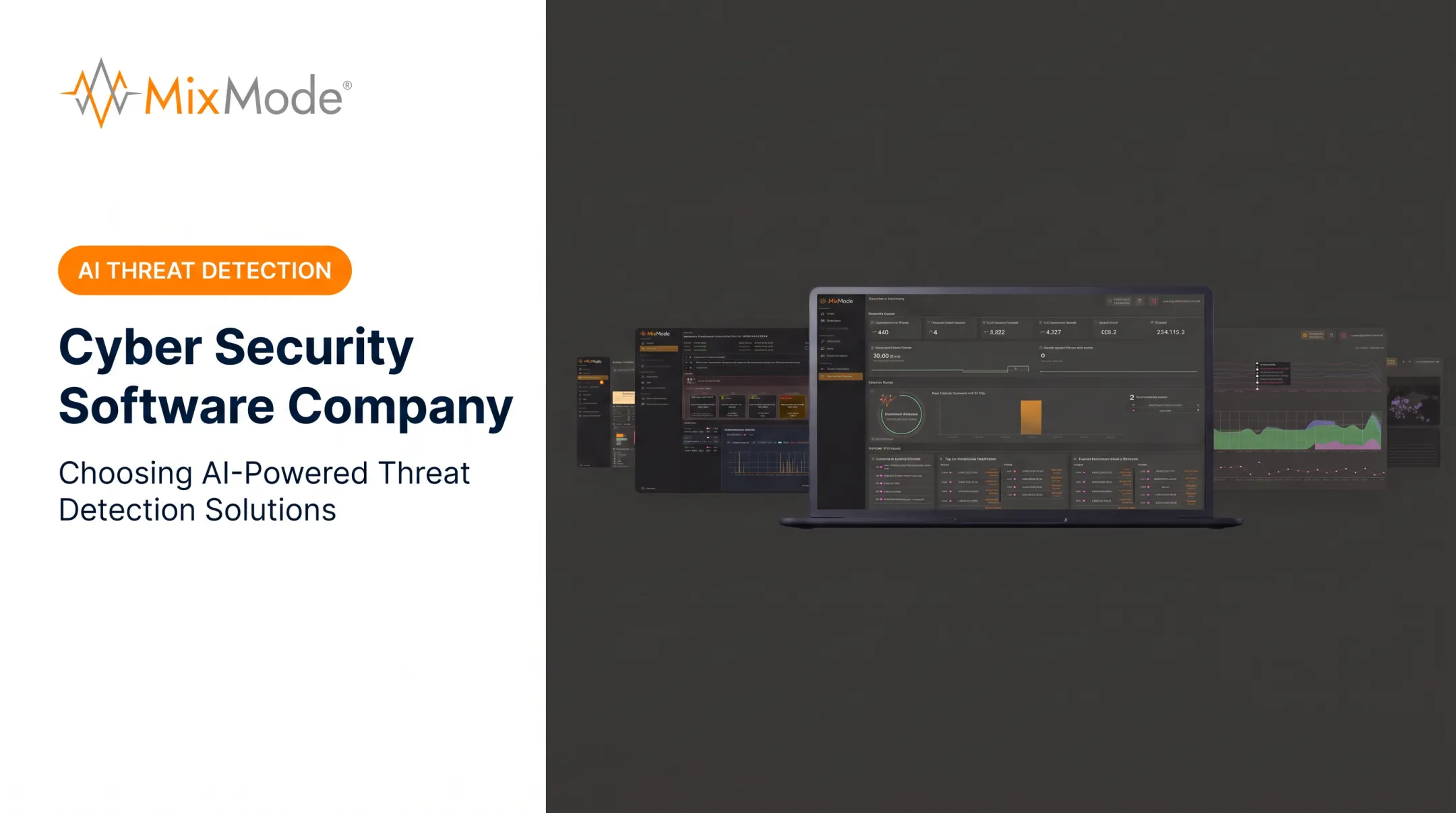
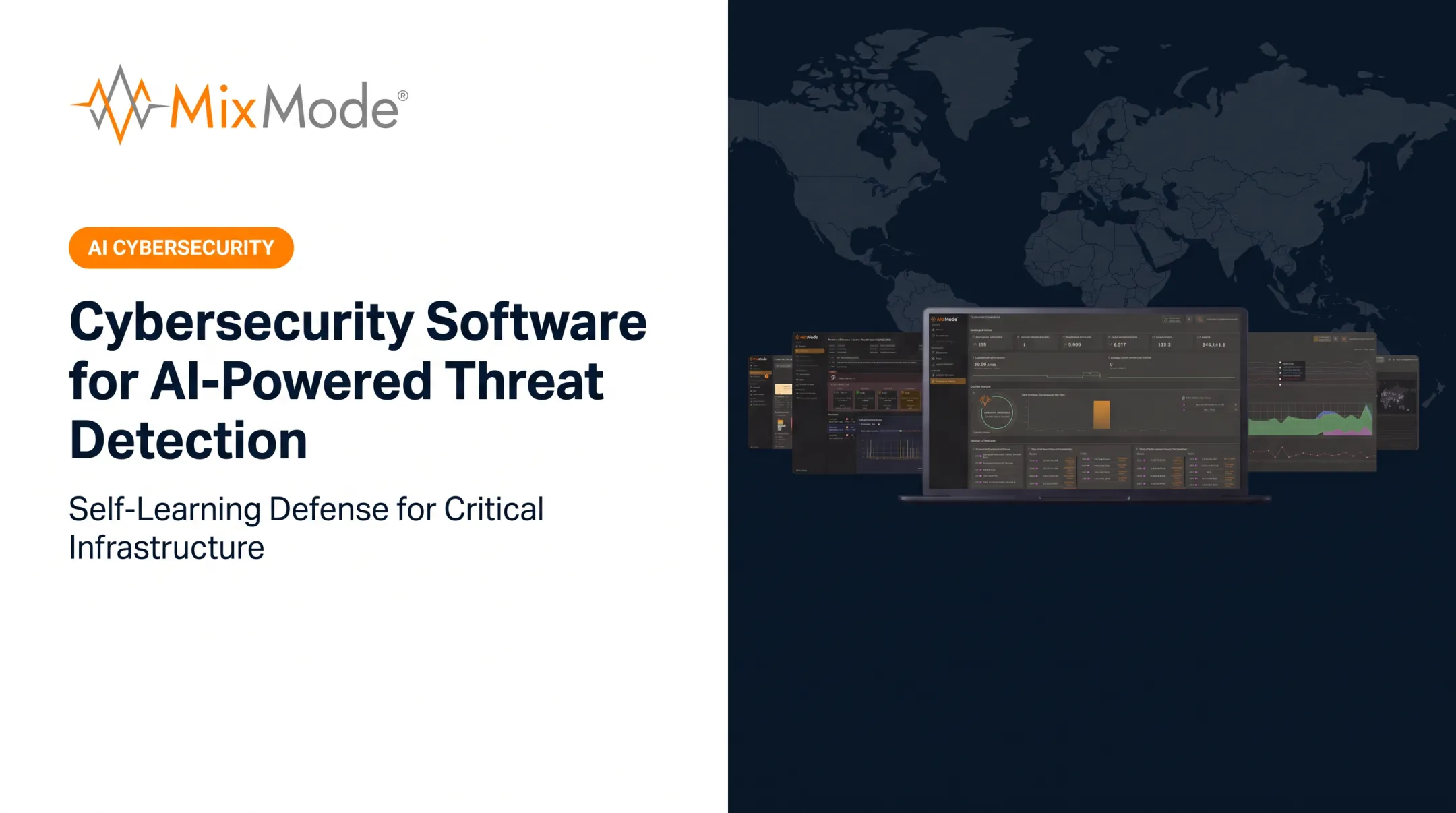
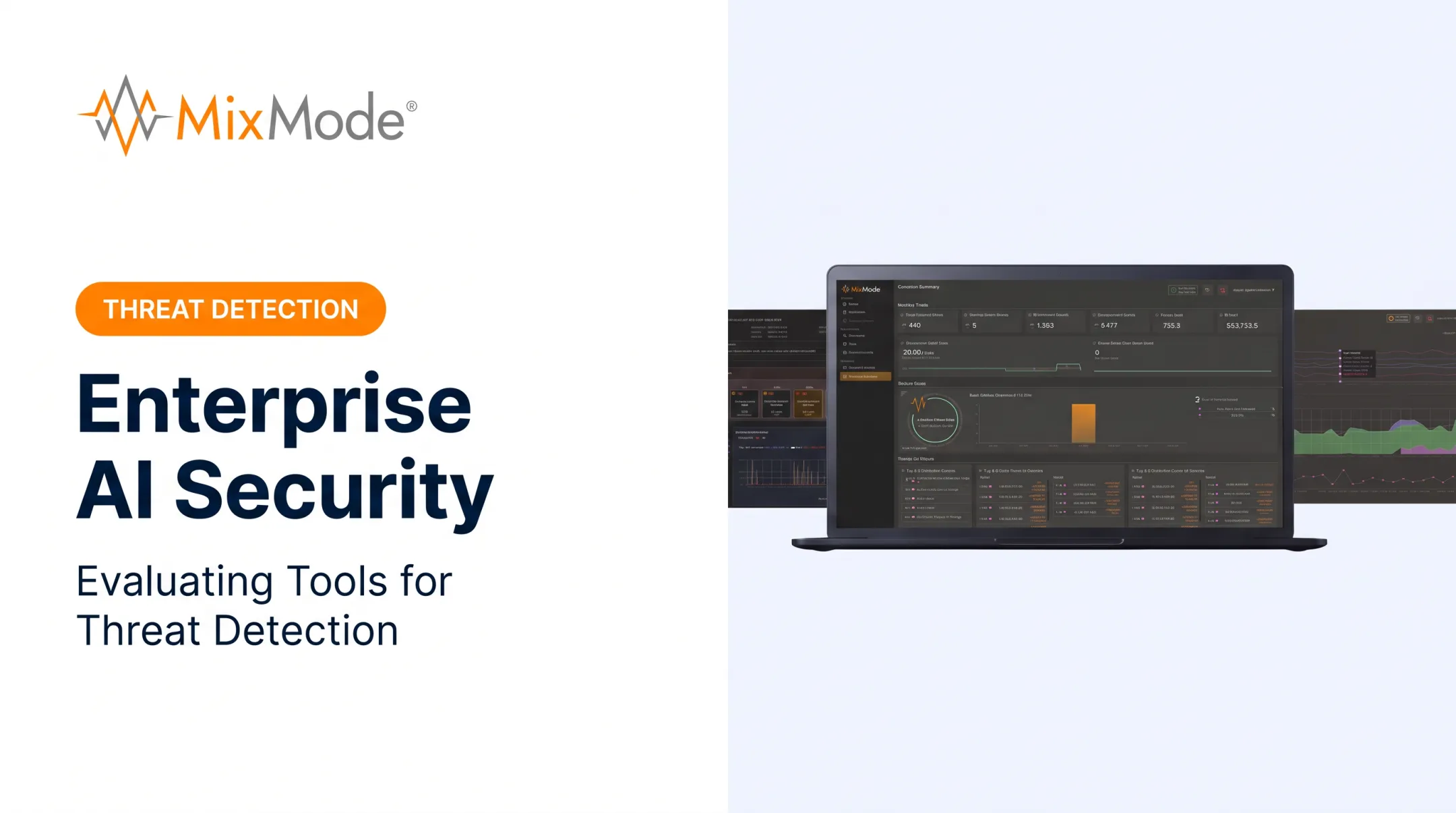
MixMode is an AI-first cybersecurity company whose Cybersecurity Intelligence Layer is built to help enterprises, government agencies, and critical-infrastructure organizations detect known and unknown threats in real time. A few differentiators worth evaluating directly:
- Patented, self-learning AI that models network context continuously, without relying on rules, signatures, or historical training data
- Context-aware analysis that flags pre-attack indicators and in-progress activity, not just completed compromises
- Reduced alert fatigue: in one deployment, false positives dropped by more than 96% within the first week, freeing analysts to focus on real investigations
MixMode is designed to deploy across cloud, hybrid, on-premises, edge, air-gapped, and DDIL environments, without appliances and typically in under an hour. For organizations running connected, disconnected, or mission-critical infrastructure, that flexibility matters. Validate it against your specific environment during an evaluation rather than treating it as a generic claim.
The platform also integrates with existing SIEM and orchestration tools and is built to analyze large data environments, including traffic exceeding 100 Gbps. Whether that integration and scale match your stack is exactly the kind of thing a proof of concept should confirm.

If your security team is weighing AI-driven detection against the noise and gaps in your current setup, it's worth a conversation about your environment, detection objectives, and evaluation criteria with MixMode's team.
Conclusion
The best security software for a company isn't necessarily the most popular antivirus brand or the platform with the longest AI feature list. It's the solution that fits your actual attack surface and operational constraints.
Evaluate these factors together, not one at a time:
- Detection quality and context
- Integrations and deployment fit
- Governance and analyst impact
- Operational workload
Then establish baseline metrics, run a realistic proof of concept using your own telemetry, and revisit performance periodically as your threat landscape and infrastructure change.
Frequently Asked Questions
What is the best cybersecurity software for businesses?
The best choice depends on company size, attack surface, risk profile, compliance needs, and existing tools. Layered enterprise security — not a single antivirus product — is what most organizations actually need.
What software do security companies use?
Common categories include endpoint protection, identity and access management, firewalls, email security, SIEM, SOAR, vulnerability management, threat intelligence, and AI-driven behavioral analytics, usually combined rather than used alone.
What is the most popular cybersecurity software?
Popularity varies by market segment and use case. Prioritize independently validated effectiveness, integration, deployment fit, and operational load over brand recognition when comparing options.
What is the best antivirus software for corporate use?
Business-grade endpoint protection differs from consumer antivirus through centralized administration, policy controls, telemetry, and response capability. Those features matter far more than scan-engine marketing for corporate environments.
How can I protect my business from cyber attacks?
Layer controls: MFA, least privilege, regular patching, secure backups, employee training, network segmentation, and continuous monitoring. Pair those with a tested incident response plan and periodic validation of detection capability.
Is antivirus still necessary?
Endpoint malware prevention still has a role, but it doesn't cover credential abuse, cloud misconfigurations, or lateral movement. Modern organizations pair it with identity, network, and behavioral detection to close those gaps.