Introduction: IDS vs IPS vs SIEM
Most security operations centers run an IDS, an IPS, and a SIEM at the same time. Yet many teams still can't articulate why they need all three or where one tool's job ends and another's begins.
That confusion shows up in alert fatigue. In fact, 60% of organizations report encountering false positives frequently or very frequently, according to SANS's detection report.
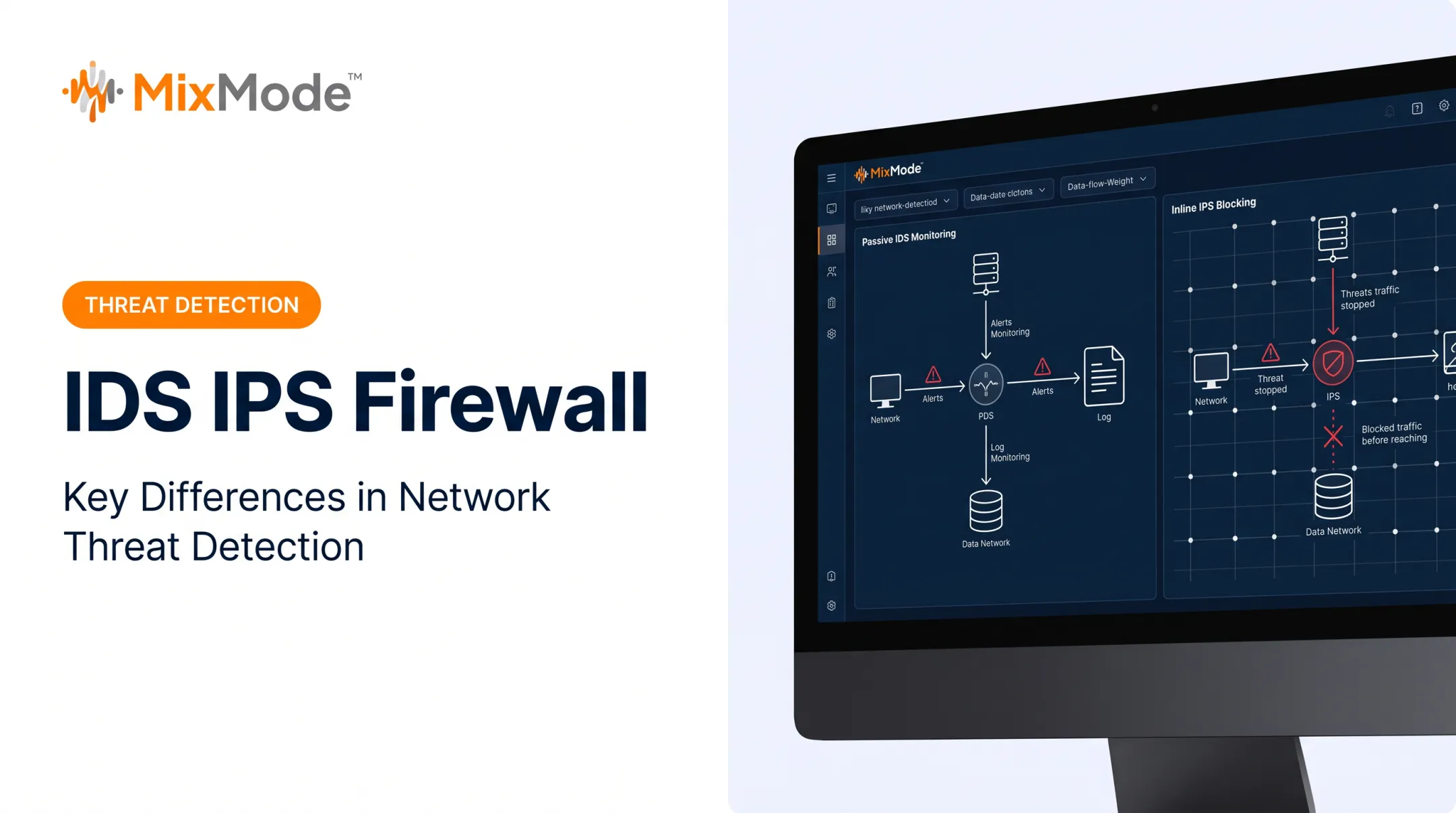
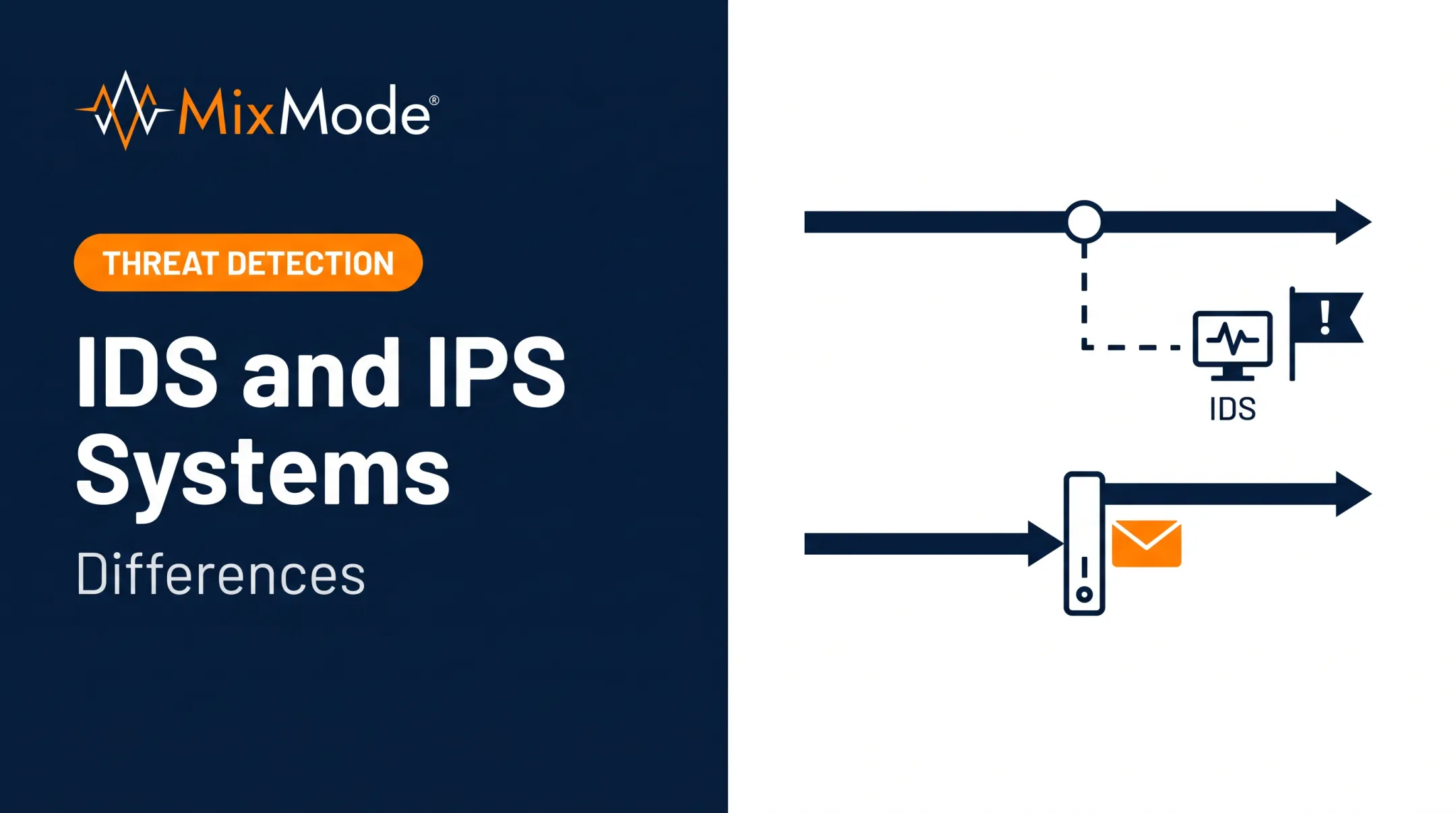
Here's the short version: an IDS watches traffic and raises a flag. An IPS sits inline and can actually block what it sees. A SIEM pulls data from everywhere and gives you the context to know if that flag matters.
This article breaks down what each tool actually does, where they overlap, where they don't, and why most mature security programs end up layering all three rather than picking a favorite.
Key Takeaways
- IDS provides visibility and alerting; it typically doesn't stop malicious activity on its own
- IPS sits inline and can block, drop, or reset traffic that matches a threat indicator
- SIEM correlates logs across security, identity, cloud, and endpoint sources for broader context
- The right mix depends on architecture, compliance needs, staffing, and risk tolerance for automation
What IDS, IPS, and SIEM Do
Intrusion Detection Systems (IDS)
An IDS monitors network or host activity and flags suspicious behavior. NIST's glossary describes it as a system that provides real-time or near-real-time warning of attempts to access resources without authorization.
There are two main types:
- Network-based IDS (NIDS): Watches traffic across a network segment, analyzing protocol activity for anomalies
- Host-based IDS (HIDS): Monitors events and characteristics on a single device, catching activity that network sensors might miss
Detection relies on a few different methods: signature matching against known attack patterns, reputation data, rule-based logic, or anomaly detection built on behavioral baselines. None of these are perfect.
Signature-based detection catches known threats reliably but misses novel ones. Anomaly-based detection can surface new attack patterns, but it also generates false positives when "normal" behavior shifts, which it constantly does in real networks.
Intrusion Prevention Systems (IPS)
An IPS does everything an IDS does, then takes it a step further. Deployed inline, it can block packets, reset connections, or drop sessions the moment it identifies a match.
That automation cuts both ways. Fast blocking limits exposure, but a poorly tuned rule can just as easily interrupt legitimate business traffic. This is why fail-open versus fail-closed configuration matters: fail-open lets traffic pass if the IPS fails, prioritizing availability; fail-closed blocks everything, prioritizing security.

Neither choice is free of risk, so most teams pair IPS deployment with staged testing, documented exceptions, and formal change control before enforcing new rules in production.
Security Information and Event Management (SIEM)
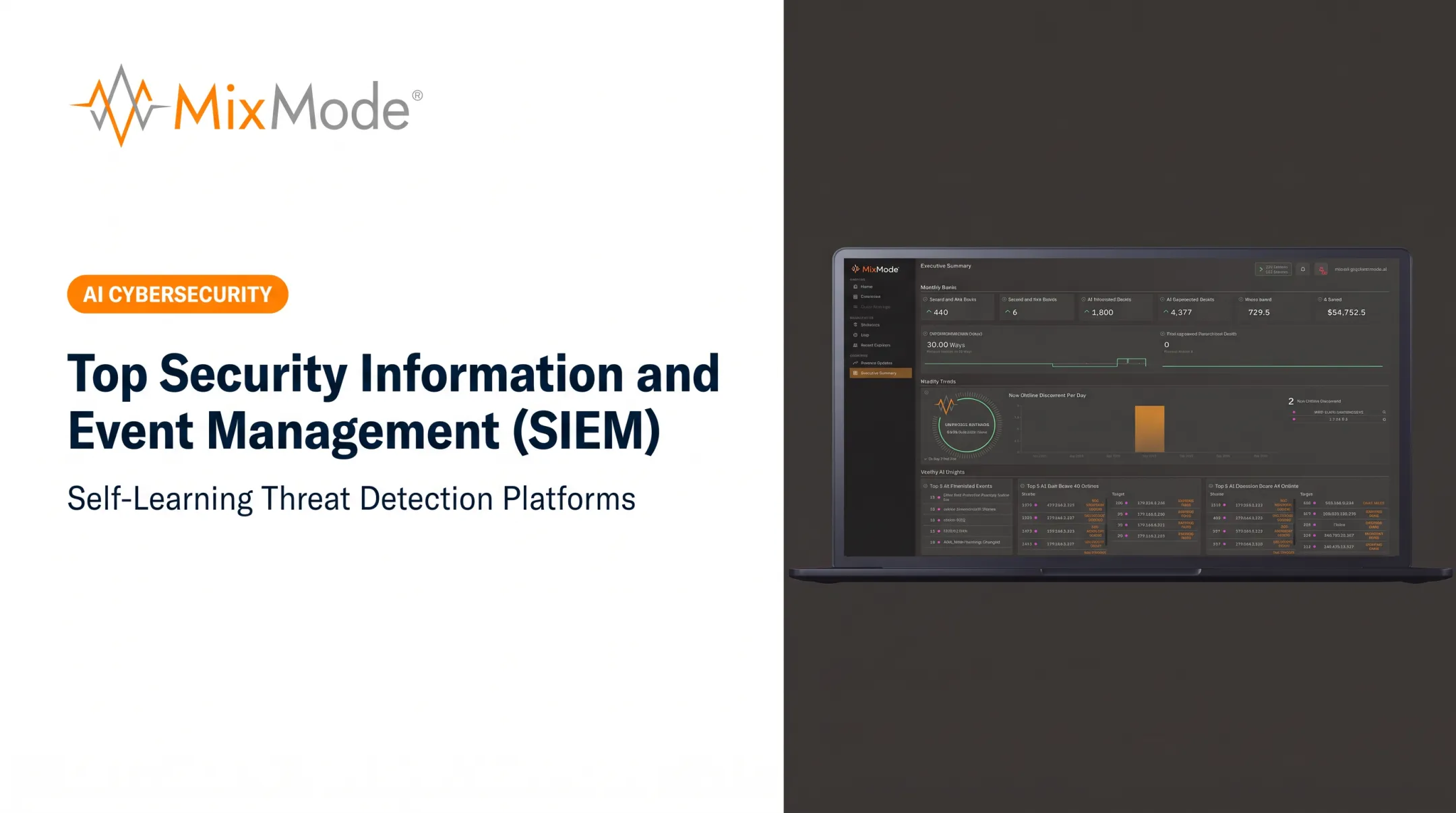
A SIEM doesn't sit in the traffic path at all. It collects, normalizes, and correlates logs from firewalls, endpoints, identity systems, cloud platforms, and IDS/IPS sensors, then supports investigation, dashboards, and compliance reporting.
One caveat worth stating plainly: a SIEM doesn't replace network or endpoint controls by itself. Its ability to actually respond to a threat depends entirely on the integrations, playbooks, and automation built around it, not the platform alone.
IDS vs IPS vs SIEM: Key Differences
The three tools answer different questions. IDS asks "is something suspicious happening?" IPS asks "should I stop this right now?" SIEM asks "what does this mean across my entire environment?"
| Dimension | IDS | IPS | SIEM |
|---|---|---|---|
| Primary purpose | Detect and alert | Detect and block inline | Correlate and investigate |
| Placement | Passive, out-of-band | Inline, in the traffic path | Centralized analysis platform |
| Data scope | Network segment or single host | Network or host activity | Logs from dozens of sources |
| Response | Requires a person or connected system | Immediate, predefined action | Prioritizes or triggers response via SOAR |
| Best fit | Visibility without disrupting traffic | Environments that can tolerate automated blocking | Cross-system correlation and compliance |
Detection coverage varies with method, not just tool type. Signature-based controls handle known threats well but miss zero-days. Behavioral and anomaly methods expose deviations, but they need baselining and human validation before you can trust them.
This is where SIEM correlation earns its keep. It can connect several individually low-risk events—an odd login time, an unusual data transfer, and a flagged DNS query—into one coherent incident that none of the sources would have flagged alone.
There's also a hard trade-off every security team runs into. NIST's IDPS guide notes that reducing false positives generally increases false negatives, and vice versa. There's no setting that eliminates both.
Deployment considerations compound this:
- Inline IPS placement affects network performance
- SIEM ingestion volume drives storage costs
- Every added sensor increases the tuning burden on whoever watches the alerts
How They Work Together in a Layered Security Architecture
Picture a typical detection flow: an IDS or IPS flags suspicious traffic on the network. That event gets forwarded to the SIEM, which correlates it against endpoint logs, identity activity, DNS queries, and cloud events to build a fuller picture. Suddenly a single alert becomes an incident timeline.
This is the layered model in practice:
- IDS/IPS provides the network-level signal and, where appropriate, enforcement
- SIEM handles enterprise-wide investigation, prioritization, and reporting across every connected tool
- SOAR turns correlated findings into automated response when workflows are connected
When SIEM or SOAR workflows are wired in correctly, that correlation can trigger real action: opening a ticket, enriching the alert with threat intelligence, isolating an endpoint, or disabling a compromised account. MixMode, for example, correlates AWS CloudTrail traffic with VPC Flow Logs and SIEM data to flag IPs behaving suspiciously across multiple data streams at once.

That cross-source correlation is something a single IDS or IPS sensor cannot do on its own.
Where Integration Breaks Down
In practice, this pipeline fails in predictable ways:
- Inconsistent log formats across vendors that require constant normalization work
- Missing or mismatched timestamps that throw off correlation timing
- Encrypted traffic that network sensors can't inspect without decryption
- Alert volume that overwhelms analysts before correlation even happens
- Unclear ownership between network teams and the SOC
NIST's CSF 2.0 addresses the correlation piece directly, stating that information should be correlated from multiple sources, and recommends validating the architecture through security tests and exercises rather than assuming it works as designed.
Closing the Known-Unknown Gap
Rules and signatures catch what's already been seen before. They don't catch what hasn't. That's the gap behavioral analytics and self-learning technology are built to close.
MixMode's Cybersecurity Intelligence Layer is one example, a context-aware, rules-free platform that models network behavior continuously to detect both known and unknown activity across IT, OT, and distributed environments. It complements existing IDS, IPS, and SIEM investments as a layer beside them, built for activity that signature-based tools were never designed to catch.
How to Choose the Right Combination
Start with the problem you're actually trying to solve, not the tool category.
- Choose IDS when you need visibility and alerting without touching live traffic
- Choose IPS when inline prevention is required and you can safely enforce blocking without disrupting operations
- Choose SIEM when you need centralized correlation across many systems, locations, or compliance requirements
Your environment shapes the decision just as much. What "right" looks like depends on factors such as:
- Cloud and hybrid infrastructure
- Remote users
- OT networks that can't tolerate downtime
- Air-gapped systems
- Existing firewall or endpoint investments
Before committing to a platform, run through this checklist:
- Telemetry: What data sources do you actually need to ingest?
- Detection methods: Signature, anomaly, or both?
- Integration support: Does it connect to your existing SIEM, SOAR, or EDR tools?
- Response permissions: Who approves automated actions, and how are they rolled back?
- Staffing: Do you have analysts to tune rules and investigate alerts?
- Compliance: Does the retention and reporting model meet your regulatory obligations?
Run a risk assessment or proof of concept before signing anything. One law enforcement agency that tested MixMode against its existing tools and processes saw a greater than 90% alert reduction between Day 1 and Day 5 of its proof of concept. Real testing surfaces gaps that vendor claims miss.

Conclusion: Build a Layered Detection and Response Strategy
IDS, IPS, and SIEM each solve a different piece of the puzzle: detection, prevention, and centralized intelligence. None of them is a substitute for the others.
Enterprise, government, utility, manufacturing, and healthcare environments generally get the most value by integrating all three, then layering in context-aware analytics where rules and signatures fall short. MixMode's Cybersecurity Intelligence Layer is built for that gap, detecting both known and unknown threats in real time without predefined rules or signatures.
If you're not sure where your current stack has blind spots, figure that out before the next incident finds them for you. Talk to MixMode about evaluating your detection gaps.
Frequently Asked Questions
How do IDS, IPS, and SIEM differ?
IDS detects and alerts on suspicious activity. IPS detects and can block that activity inline. SIEM aggregates and correlates events from multiple sources to support investigation and response. They're complementary tools, not substitutes for one another.
Can a SIEM replace IDS and IPS?
No. A SIEM analyzes and correlates the events that IDS and IPS generate; it doesn't monitor traffic or enforce blocking on its own. Removing network-level detection leaves a visibility gap no amount of correlation can fill.
Does an IPS guarantee an attack gets blocked?
No. An IPS attempts to stop intrusive activity before it reaches its target, but that's an attempt, not a guarantee. Evasive techniques and misconfigured rules can both let traffic through.
What's the difference between NIDS and HIDS?
NIDS monitors traffic across a network segment or device; HIDS monitors activity and characteristics on a single host. Most layered architectures use both for overlapping coverage.
Why do security teams still get so many false positives?
Rule and signature-based tools can't always distinguish unusual-but-legitimate activity from genuine threats. Tightening detection sensitivity to catch more threats typically increases false positives as a trade-off, not a flaw unique to one vendor.